
Description
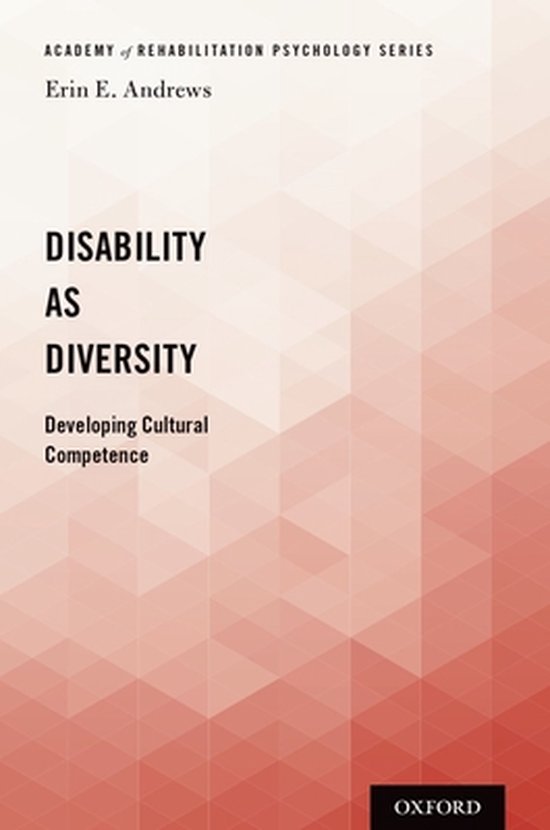
Disability as Diversity: Developing Cultural Competence reveals why disability is a cultural experience, rather than merely a medical status. Conceptual models of disability have evolved into a complex biopsychosocial phenomenon that disability service providers must understand to fully appreciate the intricacy of the lives of the people they serve. In this volume, Andrews sets the stage with the must-know history of disability rights and the social and cultural evolution of disabled people in the United States. She presents important concepts about attitudes toward disability and the impact of ableism. Andrews illustrates that not only are negative attitudes harmful, but that overly positive stereotypes can have an equally detrimental effect on disabled people. The reader will learn about disability microaggressions and how attempts to improve disability awareness can be misguided. Andrews argues that there is a distinct disability culture, and introduces the reader to its characteristics and features. She explores the concept of disability identity development, and how some people with disabilities identify readily as disabled and embrace the disability community, while others do not view themselves as disabled even though they meet commonly accepted criteria for disability. Andrews delves into the intricacies and controversies of disability language, including person-first and identity-first language. The reader will gain enhanced knowledge and skills to provide culturally competent care to individuals, as well as methods to enrich cultural humility at the organizational level. Andrews offers readers a guide to disability-related considerations for psychological testing and assessment and the role of universal design. Readers will learn about specific considerations for intervention with children and adults with disabilities, including how to tailor intervention approaches, clinician attitudes, and the use of evidence based treatments. Researchers will find a thorough exploration of the challenges inherent in disability research, the importance of full consumer inclusion, and future directions to reduce health disparities based on disability. This book offers practical suggestions for clinicians and researchers who work with people with disabilities in order to be culturally effective in all aspects of assessment, intervention, and scientific inquiry. LangueenVersionBrochéDate de sortie initiale07 janvier 2020Nombre de pages240IllustrationsNon
Personnes impliquées
Auteur principal
Erin E. Andrews
Editeur principal
Oxford University Press Inc
Informations sur le fabricant
Nom du fabricantLibri GmbHAdresse électronique du fabricant[email protected]Informations sur le fabricantLes informations du fabricant ne sont actuellement pas disponibles
Autres spécifications
Hauteur de l’emballage15 mmHauteur du produit15 mmLargeur d’emballage231 mmLargeur du produit231 mmLivre d‘étudeOuiLongueur d’emballage155 mmLongueur du produit155 mmPoids de l’emballage318 gPolice de caractères extra largeNonPornoNon
EAN
EAN9780190652319
Sécurité des produits
Opérateur économique responsable dans l’UE
Afficher les données
Vous trouverez cet article :
Catégories
Hommes et société
Médecine et Soins infirmiers
Psychologie
Services de soins infirmiers et Services d’urgence
Questions sociales et éthiques
Neuropsychologie
Revalidation
Invalidité
Livres
Livre, ebook ou livre audio ?
Livre
Disponibilité
Disponible à l’adresse suivante
Langue
Anglais
Type de livre
Paperback




Avis
Il n’y a pas encore d’avis.