
Description
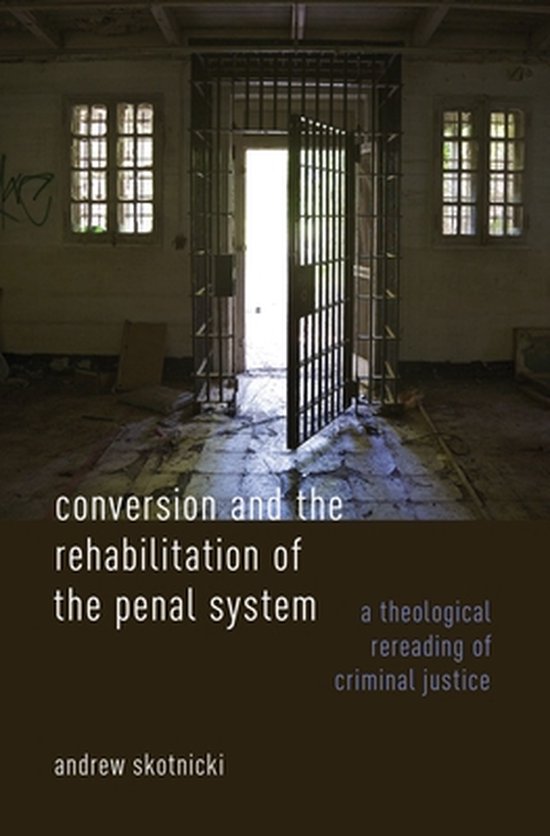
In this book, Andrew Skotnicki argues that the criminal justice system can only be rehabilitated by eliminating punishment and policies based upon deterrence, rehabilitation, and the incapacitation of the urban poor and returning to the original justification for the practice of confinement: conversion. The Cincinnati Penal Congress of 1870 ushered in the era of « progressive » penology: the use of statistical and social scientific methodologies, commitment to psychiatric and therapeutic interventions, and a new innovation–the reformatory–as the locus for the application of these initiatives. The prisoner was now seen as a specimen to be analyzed, treated, and properly socialized into the triumphal current of American social and economic life. Of course, the Progressive rehabilitative initiatives succumbed in the 1970s to withering criticism from the proponents of equally futile strategies for addressing « the crime problem »: retribution, deterrence, and selective incapacitation. The early Christian community developed a methodology for correcting human error that featured the unprecedented belief that a period of time spent in a given penitential locale, with the aid and encouragement of the community, was sufficient in and of itself to heal the alienation and self-loathing caused by sin and to lead an individual to full reincorporation into the community. The « correctional » practice was based upon the conviction that cooperative sociability–or conversion–is possible, regardless of the specific offense and that there is no need to inflict suffering or use the act of punishment as a warning to potential offenders or to intervene in the life of the offender with rehabilitation. Andrew Skotnicki contends that the modern practice of criminal detention is a protracted exercise in needless violence predicated upon two foundational errors. The first is an inability to see the imprisoned as human beings fully capable of responding to an affirmative accompaniment rather than maltreatment and invasive forms of therapy. The second is a pervasive dualism that constructs a barrier between the detainee and those empowered to supervise, rehabilitate, and punish them. In this book, Skotnicki argues that the criminal justice system can only be rehabilitated by eliminating punishment and policies based upon deterrence, rehabilitation, and the incapacitation of the urban poor and returning to the original justification for the practice of confinement: conversion. LangueenVersionCouverture rigideDate de sortie initiale30 mai 2019Nombre de pages200IllustrationsNon
Personnes impliquées
Auteur principal
Andrew Skotnicki
Editeur principal
Oxford University Press Inc
Informations sur le fabricant
Nom du fabricantLibri GmbHAdresse électronique du fabricant[email protected]Informations sur le fabricantLes informations du fabricant ne sont actuellement pas disponibles
Autres spécifications
Hauteur de l’emballage23 mmHauteur du produit23 mmLargeur d’emballage239 mmLargeur du produit239 mmLivre d‘étudeOuiLongueur d’emballage155 mmLongueur du produit155 mmPoids de l’emballage408 gPolice de caractères extra largeNonPornoNon
EAN
EAN9780190880835
Sécurité des produits
Opérateur économique responsable dans l’UE
Afficher les données
Vous trouverez cet article :
Catégories
Hommes et société
Droit
Religion, spiritualité et philosophie
Délits et Criminalité
Services sociaux
Droit pénal et droit de la procédure pénale
Religion
Punition
Travail social
Législation pénale
Christianisme
Théologie
Livres
Livre, ebook ou livre audio ?
Livre
Disponibilité
Disponible à l’adresse suivante
Langue
Anglais
Type de livre
Hardcover




Avis
Il n’y a pas encore d’avis.