
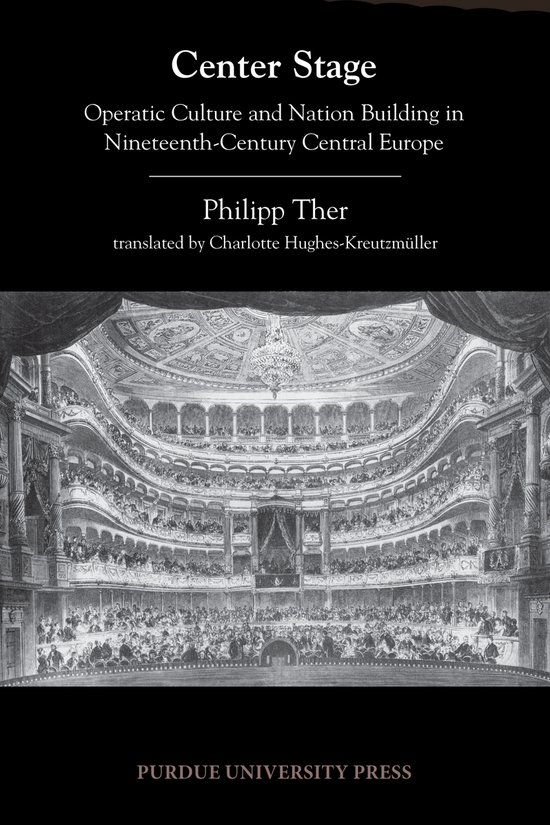
Description
This volume, a revised and extended version of two well-reviewed books published in German and Czech, explores the social and political background to this “opera mania” in nineteenth century Central Europe. Grand palaces of culture, opera theaters marked the center of European cities like the cathedrals of the Middle Ages. As opera cast its spell, almost every European city and society aspired to have its own opera house, and dozens of new theaters were constructed in the course of the « long » nineteenth century. At the time of the French Revolution in 1789, only a few, mostly royal, opera theaters, existed in Europe. However, by the turn of the nineteenth and twentieth centuries nearly every large town possessed a theater in which operas were performed, especially in Central Europe, the region upon which this book concentrates. This volume, a revised and extended version of two well-reviewed books published in German and Czech, explores the social and political background to this « opera mania » in nineteenth century Central Europe. After tracing the major trends in the opera history of the period, including the emergence of national genres of opera and its various social functions and cultural meanings, the author contrasts the histories of the major houses in Dresden (a court theater), Lemberg (a theater built and sponsored by aristocrats), and Prague (a civic institution). Beyond the operatic institutions and their key stage productions, composers such as Carl Maria von Weber, Richard Wagner, Bed?ich Smetana, Stanis?aw Moniuszko, Antonín Dvo?ák, and Richard Strauss are put in their social and political contexts. The concluding chapter, bringing together the different leitmotifs of social and cultural history explored in the rest of the book, explains the specificities of opera life in Central Europe within a wider European and global framework. LangueenVersionBrochéDate de sortie initiale15 février 2014Nombre de pages340IllustrationsNon
Traduction
Premier traducteur
Charlotte Hughes-Kreutzmuller
Personnes impliquées
Auteur principal
Philipp Ther
Editeur principal
Purdue University Press
Informations sur le fabricant
Nom du fabricantMare Nostrum Group B.V.Adresse électronique du fabricant[email protected]Informations sur le fabricantLes informations du fabricant ne sont actuellement pas disponibles
Autres spécifications
Hauteur de l’emballage229 mmHauteur du produit25 mmLargeur d’emballage152 mmLargeur du produit159 mmLivre d‘étudeNonLongueur d’emballage20 mmLongueur du produit235 mmPoids de l’emballage476 gPolice de caractères extra largeNon
EAN
EAN9781557536754
Sécurité des produits
Opérateur économique responsable dans l’UE
Afficher les données
Vous trouverez cet article :
Catégories
Art et Photographie
Histoire
Musique
Histoire sociale et Culturelle
Styles de musique
Opéra
Périodes
Histoire postmoderne
Livres
Livre, ebook ou livre audio ?
Livre
Disponibilité
Disponible à l’adresse suivante
Langue
Anglais
Type de livre
Paperback


Avis
Il n’y a pas encore d’avis.