
Description
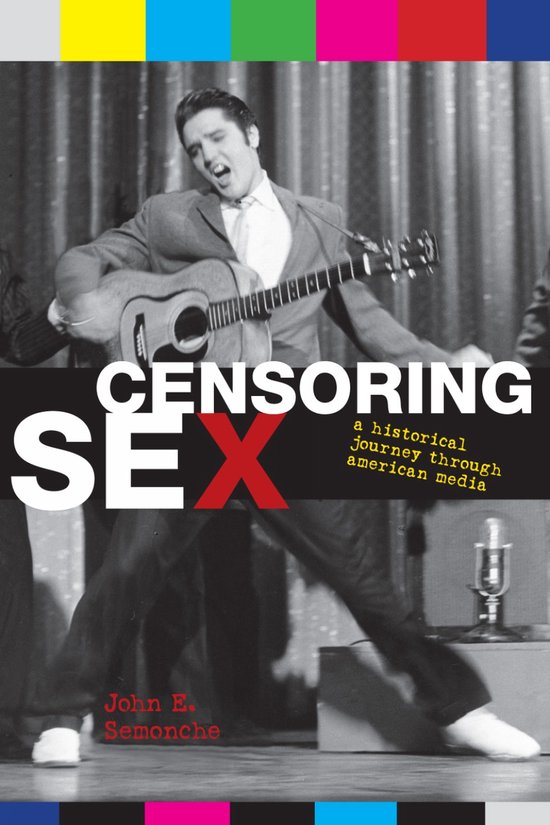
Surveys censorship for reasons of sex from nineteenth century onwards. This book covers various forms of American media-books and periodicals, pictorial art, motion pictures, music and dance, and radio, television, and the Internet. It explains via examples how and why censorship took place. In this gracefully written, accessible and entertaining volume, John Semonche surveys censorship for reasons of sex from the nineteenth century up to the present. He covers the various forms of American media—books and periodicals, pictorial art, motion pictures, music and dance, and radio, television, and the Internet. The tale is varied and interesting, replete with a stock of colorful characters such as Anthony Comstock, Mae West, Theodore Dreiser, Marcel Duchamp, Opie and Anthony, Judy Blume, Jerry Falwell, Alfred Kinsey, Hugh Hefner, and the Guerilla Girls. Covering the history of censorship of sexual ideas and images is one way of telling the story of modern America, and Semonche tells that tale with insight and flair. Despite the varieties of censorship, running from self-censorship to government bans, a common story is told. Censorship, whether undertaken to ward off government regulation, to help preserve the social order, or to protect the weak and vulnerable, proceeds on the assumption that the censor knows best and that limiting the choices of media consumers is justified. At various times all of the following groups were perceived as needing protection from sexually explicit materials: children, women, the lower classes, and foreigners. As social and political conditions changed, however, the simple fact that someone was a woman or a day laborer did not support stereotyping that person as weak or impressionable. What would remain as the only acceptable rationale for censorship of sexual materials was the protection of children and unconsenting adults. For each mode of media, Semonche explains via abundant examples how and why censorship took place in America. Censoring Sex also traces the story of how the cultural territory contested by those advocating and opposing censorship has diminished over the course of the last two centuries. Yet, Semonche argues, the censorship of sexual materials that continues in the United States poses a challenge to the free speech that is part of the foundation upon which the nation is built. Indeed, in an era in which sexual images are pervasive and the need for reliable information about sex and sexuality is growing, he questions the remaining rationales for censorship and the justification for placing obscenity outside the protection of the U. S. Constitution. LangueenVersionBrochéDate de sortie initiale20 juillet 2007Nombre de pages301IllustrationsNon
Personnes impliquées
Auteur principal
John E. Semonche
Deuxième auteur
John E. Semonche
Editeur principal
Rowman & Littlefield Pub Inc
Informations sur le fabricant
Nom du fabricantChristina GladhillAdresse électronique du fabricant[email protected]Informations sur le fabricantLes informations du fabricant ne sont actuellement pas disponibles
Autres spécifications
Hauteur de l’emballage19 mmHauteur du produit21 mmLargeur d’emballage152 mmLargeur du produit158 mmLivre d‘étudeNonLongueur d’emballage229 mmLongueur du produit220 mmPoids de l’emballage494 gPolice de caractères extra largeNon
EAN
EAN9780742551329
Sécurité des produits
Opérateur économique responsable dans l’UE
Afficher les données
Vous trouverez cet article :
Catégories
Hommes et société
Histoire
Médias
Questions sociales et éthiques
Histoire sociale et Culturelle
Censure
Sexualité et Société
Régions et pays
Amérique du nord, centrale et sud
Livres
Disponibilité
Disponible à l’adresse suivante
Langue
Anglais
Pays
Les États-Unis
Type de livre
Paperback

Avis
Il n’y a pas encore d’avis.