
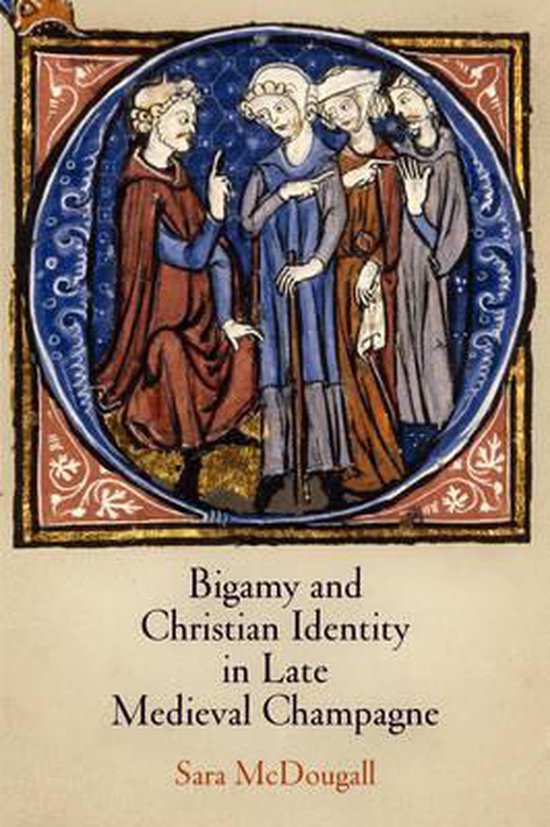
Description
This book investigates the earliest known prosecutions of bigamy. In fifteenth-century Champagne, ordinary Christians valued marriage enough to risk criminal prosecution for illegal remarriage. Meanwhile, Church officials regarded bigamy as a grave threat to Christian identity and subjected male bigamists to harsh punishment.
The institution of marriage is commonly thought to have fallen into crisis in late medieval northern France. While prior scholarship has identified the pervasiveness of clandestine marriage as the cause, Sara McDougall contends that the pressure came overwhelmingly from the prevalence of remarriage in violation of the Christian ban on divorce, a practice we might call « bigamy. » Throughout the fifteenth century in Christian Europe, husbands and wives married to absent or distant spouses found new spouses to wed. In the church courts of northern France, many of the individuals so married were criminally prosecuted. In Bigamy and Christian Identity in Late Medieval Champagne, McDougall traces the history of this conflict in the diocese of Troyes and places it in the larger context of Christian theology and culture. Multiple marriage was both inevitable and repugnant in a Christian world that forbade divorce and associated bigamy with the unchristian practices of Islam or Judaism. The prevalence of bigamy might seem to suggest a failure of Christianization in late medieval northern France, but careful study of the sources shows otherwise: Clergy and laity alike valued marriage highly. Indeed, some members of the laity placed such a high value on the institution that they were willing to risk criminal punishment by entering into illegal remarriage. The risk was great: the Bishop of Troyes’s judicial court prosecuted bigamy with unprecedented severity, although this prosecution broke down along gender lines. The court treated male bigamy, and only male bigamy, as a grave crime, while female bigamy was almost completely excluded from harsh punishment. As this suggests, the Church was primarily concerned with imposing a high standard on men as heads of Christian households, responsible for their own behavior and also that of their wives.
LangueenVersionCouverture rigideDate de sortie initiale05 avril 2012Nombre de pages216IllustrationsNon
Personnes impliquées
Auteur principal
Sara Mcdougall
Deuxième auteur
Ruth Mazo Karras
Editeur principal
University Of Pennsylvania Press
Informations sur le fabricant
Nom du fabricantLibri GmbHAdresse électronique du fabricant[email protected]Informations sur le fabricantLes autres informations du fabricant ne sont actuellement pas disponibles
Autres spécifications
Hauteur de l’emballage25 mmLargeur d’emballage159 mmLargeur du produit152 mmLivre d‘étudeNonLongueur d’emballage235 mmLongueur du produit229 mmPoids de l’emballage445 gPolice de caractères extra largeNonPornoNon
EAN
EAN9780812243987
Sécurité des produits
Opérateur économique responsable dans l’UE
Afficher les données
Vous trouverez cet article :
Catégories
Droit
Religion, spiritualité et philosophie
Histoire
Droit général
Religion
Systèmes législatifs
Christianisme
Droit ecclésiastique
Périodes
Moyen Âge
Livres
Livre, ebook ou livre audio ?
Livre
Disponibilité
Disponible à l’adresse suivante
Langue
Anglais
Type de livre
Hardcover




Avis
Il n’y a pas encore d’avis.