
Description
Perhaps the most significant development in American philosophy in recent times has been the extraordinary renaissance of Pragmatism, marked most notably by the reformulations of the so-called « Neopragmatists » Richard Rorty and Hilary Putnam. With Pragmatism offering the allure of potentially resolving the impasse between epistemological realists and antirealists, analytic and continental philosophers, as well as thinkers across the disciplines, have been energized and engaged by this movement.
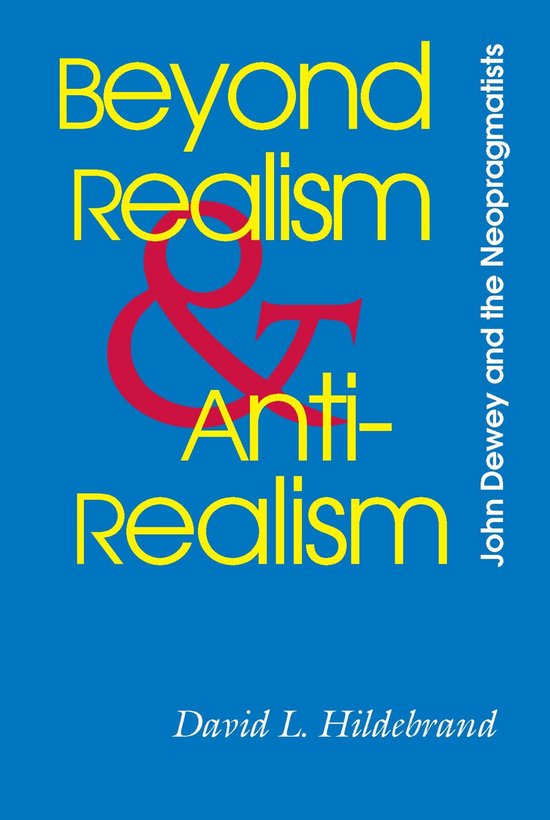
In Beyond Realism and Antirealism: John Dewey and the Neopragmatists, David L. Hildebrand asks two important questions: first, how faithful are the Neopragmatists’ reformulations of Classical Pragmatism (particularly Deweyan Pragmatism)? Second, and more significantly, can their Neopragmatisms work?
In assessing Neopragmatism, Hildebrand advances a number of historical and critical points:
• Current debates between realists and antirealists (as well as objectivists and relativists) are similar to early twentieth-century debates between realists and idealists that Pragmatism addressed extensively.
• Despite their debts to Dewey, the Neopragmatists are reenacting realist and idealist stands in their debate over realism, thus giving life to something shown fruitless by earlier Pragmatists.
• What is absent from the Neopragmatist’s position is precisely what makes Pragmatism enduring: namely, its metaphysical conception of experience and a practical starting point for philosophical inquiry that such experience dictates.
• Pragmatism cannot take the « linguistic turn » insofar as that turn mandates a theoretical starting point.
• While Pragmatism’s view of truth is perspectival, it is nevertheless not a relativism.
• Pace Rorty, Pragmatism need not be hostile to metaphysics; indeed, it demonstrates how pragmatic instrumentalism and metaphysics are complementary.
In examining these and other difficulties in Neopragmatism, Hildebrand is able to propose some distinct directions for Pragmatism. Beyond Realism and Antirealism will provoke specialists and non-specialists alike to rethink not only the definition of Pragmatism, but its very purpose.
LangueenVersionlivre numériqueDate de sortie initiale30 avril 2021Format ebookEPUB3IllustrationsNon
Personnes impliquées
Auteur principal
David L. Hildebrand
Deuxième auteur
David L. Hilderbrand
Coauteur
David L. Hilderbrand
Editeur principal
Vanderbilt University Press
Options de lecture
Lisez cet ebook surAndroid (smartphone et tablette)iOS (smartphone et tablette)Windows (smartphone et tablette)Ordinateur de bureau (Mac et Windows)Lecteur électronique Kobo
Informations sur le fabricant
Informations sur le fabricantLes informations du fabricant ne sont actuellement pas disponibles
Autres spécifications
Livre d‘étudeNonPornoNon
EAN
EAN9780826502575
Sécurité des produits
Opérateur économique responsable dans l’UE
Afficher les données
Vous trouverez cet article :
Catégories
Religion, spiritualité et philosophie
Philosophie
Traditions philosophiques
Philosophie moderne
Livres
Livre, ebook ou livre audio ?
Ebook
Langue
Anglais
Disponible en « Kobo Plus »
Disponible en « Kobo Plus »
Toegankelijkheidsinformatie
Bevat toegankelijkheidskenmerken





Avis
Il n’y a pas encore d’avis.