
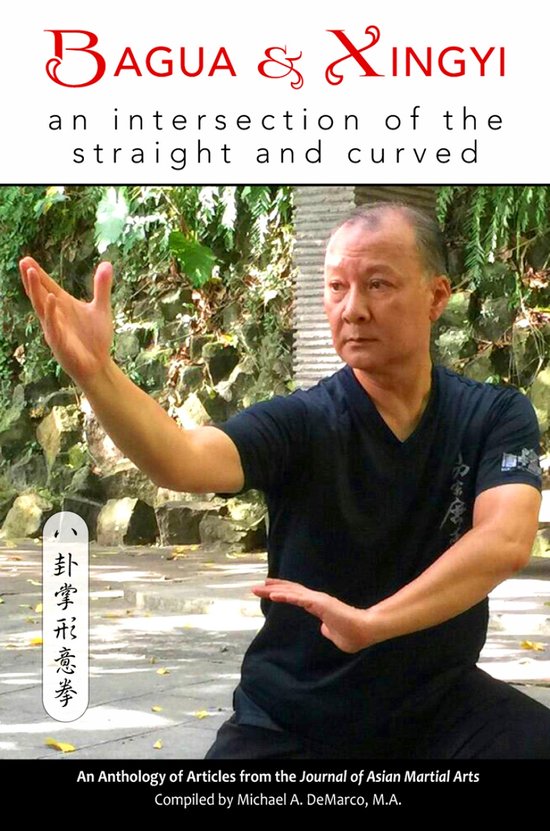
Description
Baguaquan and xingyiquan are two styles that complement each other as yin does yang. Bagua is known for its circular movements and its practice of « circle walking. » Xingyi embodies characteristic linear movements said to be derived from the logical strategies for using spear and staff. How fortunate we are to include writings in this anthology by leading authorities on these styles. Separated into three sections, the first features bagua. Allen Pittman presents five variations of the « single palm change », followed by an overview of the Yin Fu bagua linage and an interview with He Jinbao focusing on training, fighting skills, teaching and learning. Travis Joern examines how a martial artist can apply the theoretical aspects of the Book of Changes to bagua training. Hong Dzehan—son of Hong Yixiang, stellar master of the three internal systems—then shares some of his personal experiences and favorite bagua techniques. Section two contains chapters on xingyi. The interview with Luo Dexiu questions the proper way to study xingyi from the beginning to the advanced levels. Robert Yu compares American boxing with xingyi’s pragmatic fighting techniques and in the following chapter he recounts in detail how it was to study under Hong Yixiang in Taiwan nearly forty years ago. Stanley Henning gives a travelogue of a trip to Shanxi Province—the home of xingyiquan—and then discusses Che Style xingyi training methods as taught by Dr. Wu Chaoxiang, including the five element theory, twelve animal forms, two-person routines, and spear training. The third section presents some commonalities in what many refer to as the « internal arts »: bagua, xingyi, and taiji. The chapter on Fu family style beautifully details how they incorporated the essential elements of taiji, xingyi, and bagua into their majestic sixiangquan (four image boxing). Marcus Brinkman relates many of the unique insights and experiences he had during his extensive study with Luo Dexiu and Hong Yixiang, including internal development and fighting applications. Tim Cartmell provides the final chapter which explains the key concepts of « sticking and following » as they apply to the throwing methods of the Chinese internal martial arts. The rich content in this anthology comes from the rare academic and hands-on experience of those presented in chapters here. Readers will no doubt benefit from the practical practice tips as well as the other cultural details these wonderful authors share. LangueenVersionBrochéDate de sortie initiale28 juillet 2016Nombre de pages175IllustrationsNon
Personnes impliquées
Auteur principal
A. Pittman
Deuxième auteur
Tim Cartmell
Coauteur
Tim Cartmell
Editeur principal
Via Media Publishing Company,US
Informations sur le fabricant
Nom du fabricantLibri GmbHAdresse électronique du fabricant[email protected]Informations sur le fabricantLes autres informations du fabricant ne sont actuellement pas disponibles
Autres spécifications
Hauteur de l’emballage10 mmHauteur du produit10 mmLargeur d’emballage152 mmLargeur du produit152 mmLivre d‘étudeNonLongueur d’emballage228 mmLongueur du produit228 mmPoids de l’emballage240 gPolice de caractères extra largeNon
EAN
EAN9781893765337
Sécurité des produits
Opérateur économique responsable dans l’UE
Afficher les données
Vous trouverez cet article :
Catégories
Sport et plein air
Sports de combat et autodéfense
Sports de combat
Livres
Livre, ebook ou livre audio ?
Livre
Disponibilité
Disponible à l’adresse suivante
Langue
Anglais
Type de livre
Paperback

Avis
Il n’y a pas encore d’avis.