
Description
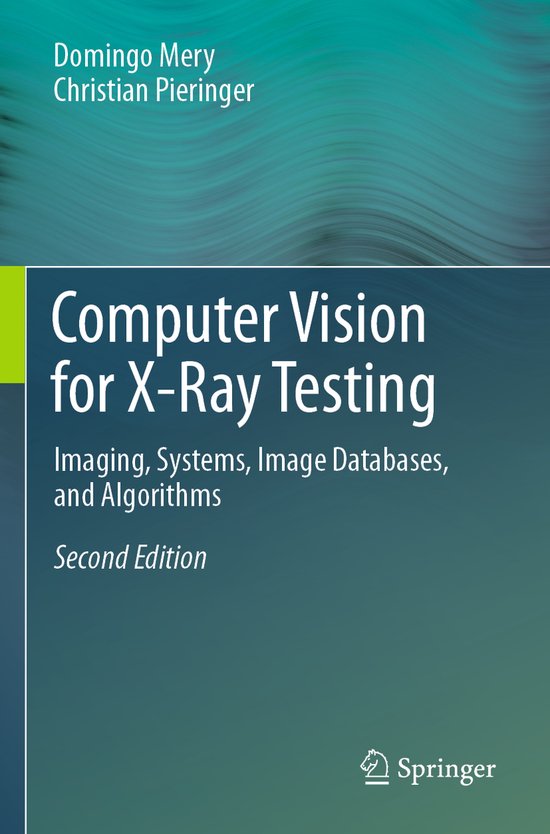
[FIRST EDITION] This accessible textbook presents an introduction to computer vision algorithms for industrially-relevant applications of X-ray testing. discusses some basic concepts for the simulation of X-ray images and presents simple geometric and imaging models that can be used in the simulation;
Building on its strengths as a uniquely accessible textbook combining computer vision and X-ray testing, this enhanced second edition now firmly addresses core developments in deep learning and vision, providing numerous examples and functions using the Python language.
Covering complex topics in an easy-to-understand way, without requiring any prior knowledge in the field, the book provides a concise review of the key methodologies in computer vision for solving important problems in industrial radiology. The theoretical coverage is strengthened with easily written code examples that the reader can modify when developing new functions for X-ray testing.
Topics and features:
- Describes the core techniques for image processing used in X-ray testing, including image filtering, edge detection, image segmentation and image restoration
- Incorporates advances in deep learning, including aspects regarding convolutional neural networks, transfer learning, and generative adversarial networks
- Provides more than 65 examples in Python, and is supported by an associated website, including a database of X-ray images and a freely available Matlab toolbox
- Includes new advances in simulation approaches for baggage inspection, simulated X-ray imaging, and simulated structures (such as defects and threat objects)
- Presents a range of different representations for X-ray images, explaining how these enable new features to be extracted from the original image
- Examines a range of known X-ray image classifiers and classification strategies, and techniques for estimating the accuracy of a classifier
- Reviews a variety of applications for X-ray testing, from industrial inspection and baggage screening to the quality control of natural products
This classroom-tested and hands-on text/guidebook is ideal for advanced undergraduates, graduates, and professionals interested in practically applying image processing, pattern recognition and computer vision techniques for non-destructive quality testing and security inspection.
Dr. Domingo Mery is a Full Professor at the Machine Intelligence Group (GRIMA) of the Department of Computer Sciences, and Director of Research and Innovation at the School of Engineering, at the Pontifical Catholic University of Chile, Santiago, Chile. Dr. Christian Pieringer is an Adjunct Instructor at the same institution.
LangueenVersionBrochéDate de sortie initiale23 décembre 2021Nombre de pages456IllustrationsAvec illustrations
Personnes impliquées
Auteur principal
Domingo Mery
Deuxième auteur
Christian Pieringer
Editeur principal
Springer Nature Switzerland AG
Deuxième édition
Springer-Verlag Gmbh
Informations sur le fabricant
Nom du fabricantSpringer Nature Customer Service Center GmbHAdresse du fabricantEuropaplatz 3 | 69115| Heidelberg| DEAdresse électronique du fabricant[email protected]Informations sur le fabricantLes informations du fabricant ne sont actuellement pas disponibles
Autres spécifications
Hauteur de l’emballage235 mmLargeur d’emballage155 mmLargeur du produit155 mmLivre d‘étudeNonLongueur d’emballage235 mmLongueur du produit235 mmPoids de l’emballage735 gPornoNonÉdition2
EAN
EAN9783030567712
Sécurité des produits
Opérateur économique responsable dans l’UE
Afficher les données
Vous trouverez cet article :
Catégories
Technologie et architecture
Ordinateurs et Informatique
Technologies informatiques
Applications médias numériques
Génie civil
Intelligence artificielle
Architecture
Vision par ordinateur
Reconnaissance de modèles
Systèmes de sécurité et systèmes d’alarme incendie
Livres
Livre, ebook ou livre audio ?
Livre
Disponibilité
Disponible à l’adresse suivante
Langue
Anglais
Type de livre
Paperback




Avis
Il n’y a pas encore d’avis.