
Description
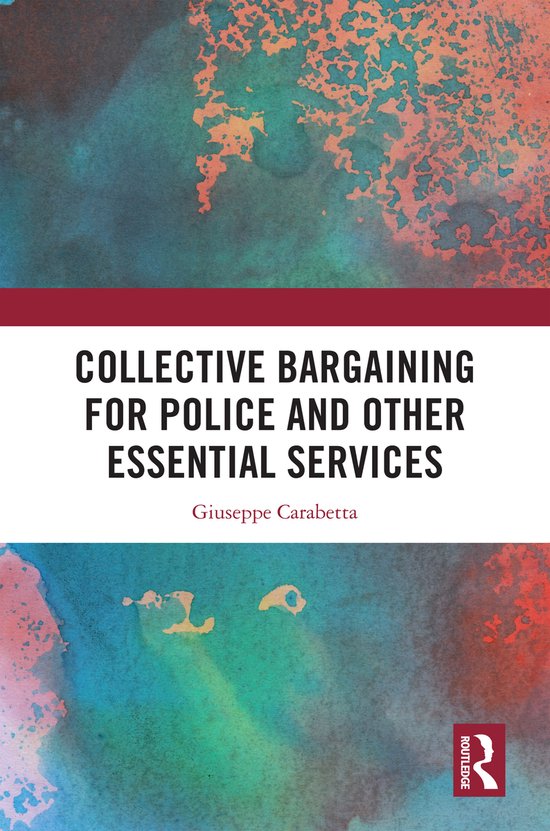
This book examines how collective bargaining disputes are resolved among police and essential service employees. The author in his extensive field-work research and his study of international case studies has developed a useful model for mandatory interest arbitration among police and other essential services personnel.
This book examines how collective bargaining disputes are resolved among police and essential service employees.
In Australia, as in other common law countries, police and other highly essential employees such as fire-fighters and ambulance officers have long had access to a form of binding arbitration to settle collective bargaining disputes. The traditional arbitration-based system in Australia has, however, been replaced in recent decades with a marked-based collective bargaining system. The current (Fair Work) system restricts access to arbitration, favouring collective bargaining based on the parties’ prerogative to make their own agreements, and supported by a limited right to industrial action — including strikes — during bargaining. Yet, police officers, particularly, are subject to considerable restraints on any entitlement to participate in industrial action. The problem is that with limited access to arbitration, and an especially limited right to industrial action, intractable disputes may continue indefinitely, without any impasse-breaking process to prevent the flow-on harms of long-running police disputes. This raises the essential question underpinning this study: what form of dispute resolution system is appropriate to protect both the legitimate industrial interests of police officers, and the community’s interest in the uninterrupted provision of essential policing services?
The author in his extensive field-work research and his study of international case studies has developed a useful model for mandatory interest arbitration among police and other essential services personnel. The lessons and recommendations in the book offer insights for essential services labour law in Australia and overseas.
LangueenVersionCouverture rigideDate de sortie initiale14 octobre 2024Nombre de pages202
Personnes impliquées
Auteur principal
Giuseppe Carabetta
Editeur principal
Routledge
Informations sur le fabricant
Nom du fabricantTaylor & Francis Verlag GmbHAdresse du fabricant– 80331 – – DEAdresse électronique du fabricant[email protected]Informations sur le fabricantLes autres informations du fabricant ne sont actuellement pas disponibles
Autres spécifications
Hauteur de l’emballage16 mmLargeur d’emballage156 mmLargeur du produit156 mmLivre d‘étudeNonLongueur d’emballage234 mmLongueur du produit234 mmPoids de l’emballage460 g
EAN
EAN9781032324067
Sécurité des produits
Opérateur économique responsable dans l’UE
Afficher les données
Vous trouverez cet article :
Catégories
Droit
Livres de gestion
Droit du travail et de la sécurité sociale
Droit international (public)
Droit général
Législation du travail
Droit international
Livres
Livre, ebook ou livre audio ?
Livre
Disponibilité
Disponible à l’adresse suivante
Langue
Anglais
Type de livre
Hardcover




Avis
Il n’y a pas encore d’avis.